
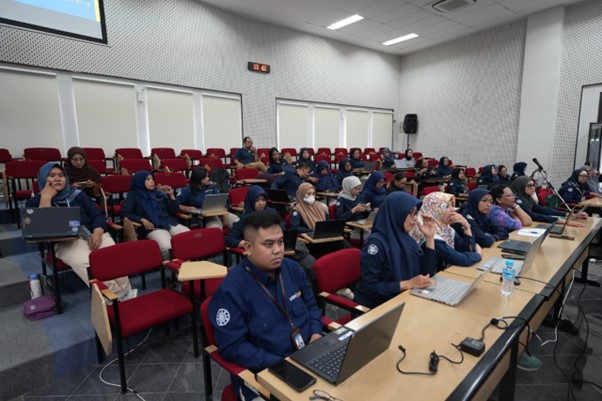
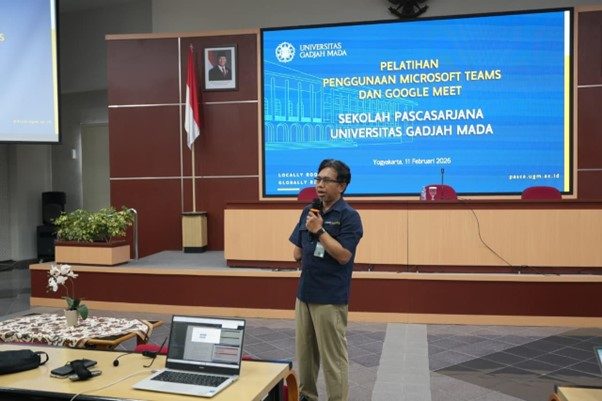
Yogyakarta, 11th February 2026 — The Graduate School of Universitas Gadjah Mada (SPs UGM) organized a training session on the use of Microsoft Teams and Google Meet at the 5th Floor Auditorium of SPs UGM as part of the efforts enhancing effectiveness of digital-based work coordination. The activity, held from 1:30 to 4:00 PM (WIB), served as a platform to strengthen digital competencies among the academic community, including executive secretaries who play an important role in supporting administrative processes and coordinating leadership activities.
Mastering Microsoft Teams and Google Meet, from the perspective of an executive secretary, has become an essential requirement in supporting daily tasks, particularly in managing meeting schedules, coordinating leadership activities, and organizing online meetings involving various work units and external partners. This training helped secretaries understand utilization of the main features on both platforms more systematically, enabling meeting preparation and implementation to be conducted in a more organized and efficient manner.
The Vice Dean for Finance, Assets, and Human Resources, Dr. techn. Khabib Mustofa, S.Si., M.Kom., delivered the training materials on the use of both platforms as tools for communication and work collaboration. In addition to the presentation session, the training also included hands-on practice sessions, allowing participants to directly explore features for organizing online meetings.
This activity, for executive secretaries, provided tangible benefits in improving the accuracy and speed of coordination, especially in managing leadership agendas that frequently involve online and hybrid meetings. The optimal use of technology is expected to help secretaries perform administrative functions more professionally while supporting the smooth implementation of leadership duties.
SPs UGM with this training demonstrated its commitment to enhancing human resource capacity while strengthening a more effective and adaptive digital work system in response to ongoing technological developments.
Author: Arfikah Istari