
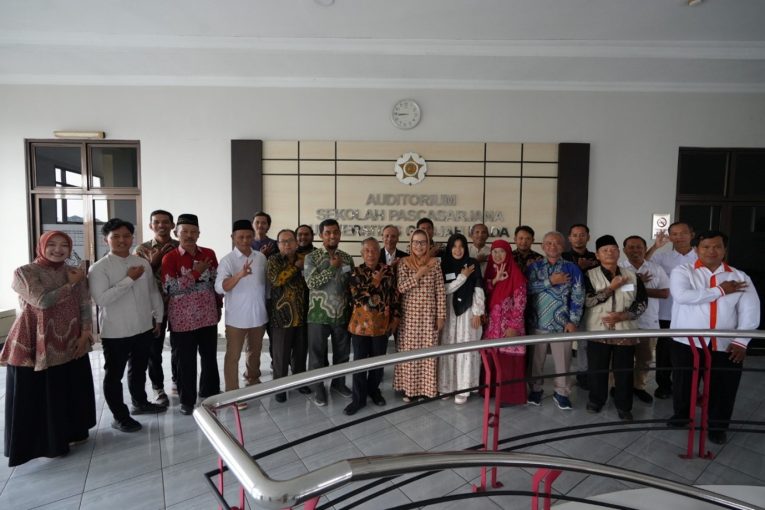
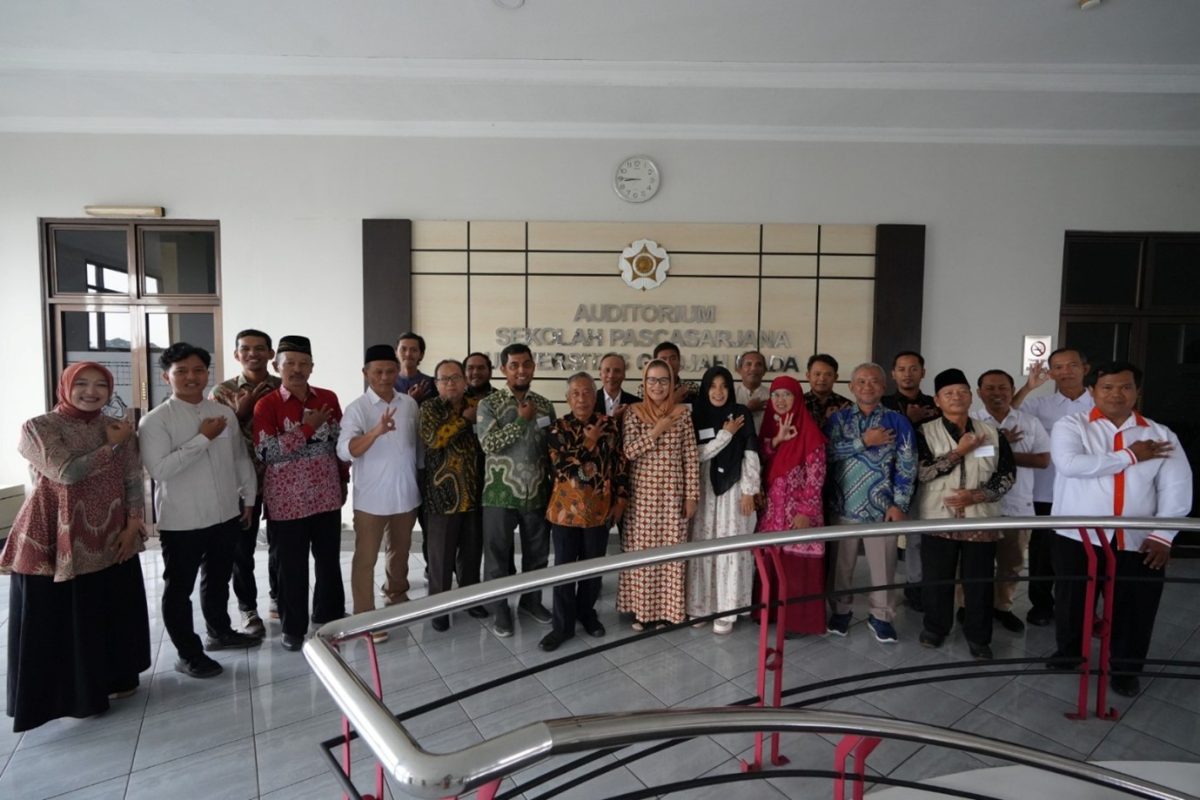
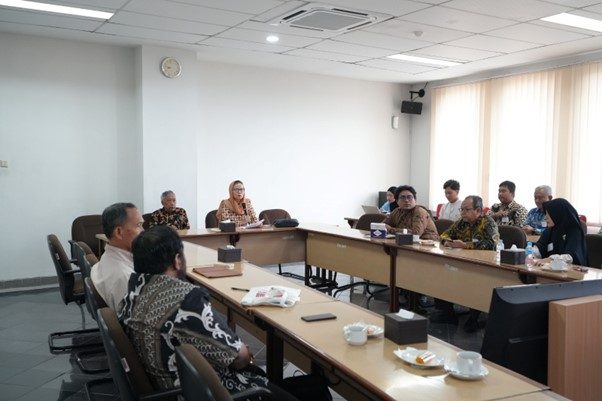
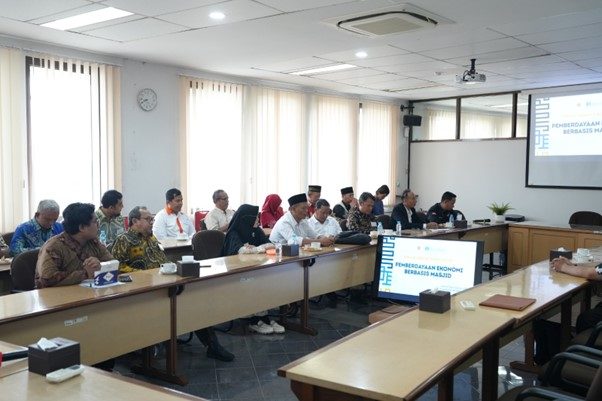
The Graduate School of Universitas Gadjah Mada (SPs UGM), in collaboration with the Department of Islamic Economic and Financial Studies of Bank Indonesia (DEKS-BI), organized a Focus Group Discussion (FGD) on Mosque-Based Economic Empowerment on Tuesday (20/1) at Meeting Room A, 5th Floor, SPs UGM. This activity was part of a pilot project of the Mosque-Based Economic Empowerment Program, which aims to strengthen the role of mosques not only as centers of worship but also as hubs for social activities and drivers of the community’s economic development.
The FGD was conducted based on a Cooperation Agreement between SPs UGM and DEKS-BI. Participants who actively attended the discussion included the SPs UGM Study Team, mosque administrators (takmir) of Masjid Miniatur Baiturrahman Aceh (Bantul), Masjid Ar-Rohmah (Klaten), and Masjid Al-Falah (Sragen), representatives of LazisMu, as well as Regional Leaders of Muhammadiyah from the respective districts.
In her opening remarks, the Dean of the Graduate School of UGM, Prof. Ir. Siti Malkhamah, M.Sc., Ph.D., expressed her hope that mosque-based economic empowerment initiatives would continue and develop sustainably. She emphasized that although formal cooperation has a defined timeframe, the spirit of collaboration and the implementation of programs at the mosque level are expected to persist and deliver tangible benefits for congregants.
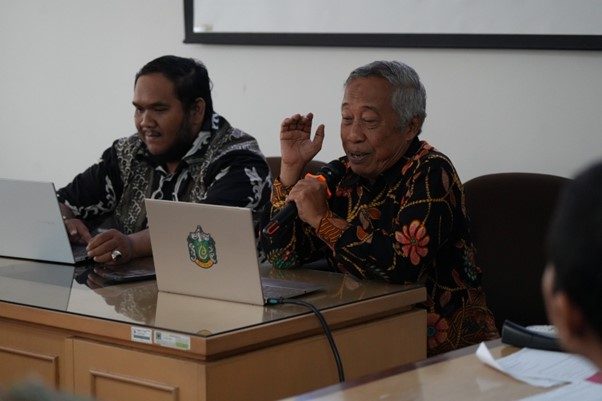
The introductory session was delivered by Dr. Dumairy, M.A., who highlighted the importance of mosques having a clear roadmap toward financial independence, being congregant-friendly, and being prepared to mobilize the community’s economy. In this context, mosques are encouraged to be capable of independently financing their operational needs, managing community funds in an accountable manner, and serving as nodes for congregational business development through the establishment and strengthening of Mosque-Owned Enterprises (Badan Usaha Milik Masjid/BUMM).
The main session of the FGD featured presentations and inputs from representatives of mosque administrators, LazisMu, and Regional Leaders of Muhammadiyah from Bantul, Klaten, and Sragen. Participants shared experiences, best practices, and challenges related to mosque financial management, maintaining and expanding the base of muzakki, empowering mustahik, developing business units, and utilizing digital media to broaden outreach and enhance program impact.
Through interactive discussions, each representative was encouraged to present innovative ideas and business opportunities that could be developed based on the potential of the mosque and its congregants. These inputs serve as important materials to complement and refine the initial findings of the SPs UGM Study Team, as well as to formulate future strategic steps.
This FGD is expected to produce concrete and applicable recommendations to strengthen the role of mosques as centers of sustainable, inclusive, and adaptive community economic empowerment.
Author: Arfikah Istari