
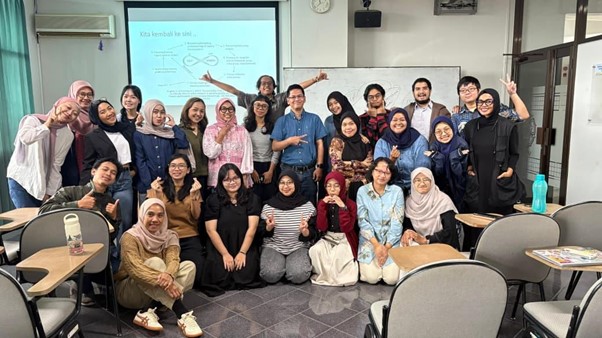
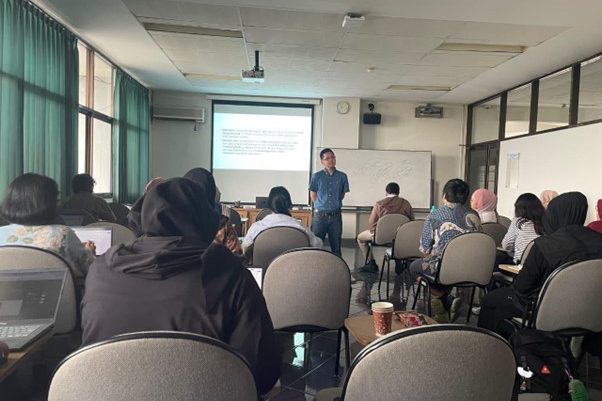
Yogyakarta, 1st December 2025 — The Media and Cultural Program at the Graduate School of Universitas Gadjah Mada held an Ethnography Discussion featuring Dr. Vidhyandika Djati Perkasa, M.Sc. as the main speaker. The event, conducted in Room 307 of the Graduate School building, forms part of the program’s ongoing efforts to strengthen methodological capacity among postgraduate students, particularly in understanding the development of ethnographic approaches in contemporary social and cultural research.
The discussion was the second session in a two-part series held on 28th November and 1st December 2025. While the first session examined New Ethnography, the second session encouraged participants to explore new methodological directions on reflective approaches emerging over recent decades. These approaches are considered vital in addressing the complexity of social phenomena and the challenges of cultural representation in the modern era.
Dr. Vidhyandika, in his presentation, emphasized the shifting in qualitative research paradigms that require scholars to be more aware of position, more reflective, and more open to integrating personal experience within their studies. He noted that today’s shifting social, political, and cultural landscapes demand research methods describing the object of study and also uncover the power relations and social structures surrounding it. “Ethnography is not merely about being present in the field, taking notes, and leaving. It requires responsibility, awareness, and honest engagement between researchers and the communities they study,” he stated, underscoring the need for methodological renewal and strong ethical grounding in qualitative research.
The session saw enthusiastic participation from students, many of whom are currently developing proposals or conducting thesis research. Participants expressed that contemporary ethnographic approaches help them design studies that remain academically rigorous while staying closely connected to personal and contextual experiences. KBM students who often engage with issues such as media culture, identity, gender, and social dynamics, offer broader and more relevant avenues of exploration. Students also noted that reflective methodology helps clarify ethical boundaries, particularly when working with vulnerable communities or in conflict settings, where researcher involvement becomes an essential part of the scientific process.
The Media and Cultural Studies Program affirmed that the Ethnography Discussion series is part of a continuous commitment to enrich students’ methodological understanding. Rapid social changes, expansion of cultural studies, and the increasing complexity of digital environments demand research methods that are adaptive and up to date. The program remains committed to bringing in scholars and researchers with strong methodological expertise to strengthen a critical, reflective, and responsive academic culture within the Graduate School.
The event concluded with the hope that students will continue exploring research methods suited to their respective projects and develop deeper academic sensitivity in examining social phenomena. The Ethnography Discussion is expected to remain a sustainable program that contributes to advancing the body of knowledge within the Graduate School of Universitas Gadjah Mada.
Author: Khoirul Mujazanah