
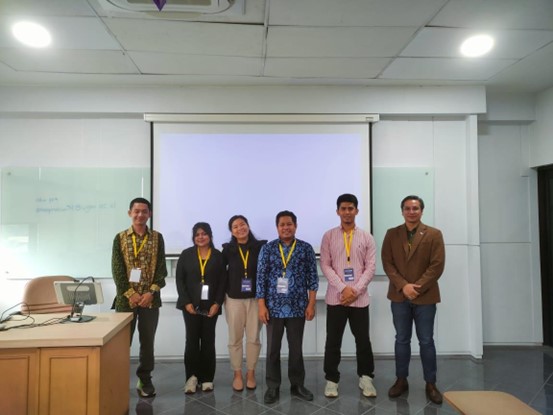
Yogyakarta, November 5th 2025 – The 13th International Graduate Students and Scholars’ Conference in Indonesia (IGSSCI) second day continued its scholarly discussion momentum with Parallel Sessions II and III. Dozen of researchers again presented their findings, tackling crucial issues ranging from regional security and climate resilience to the protection of vulnerable groups. Still carrying the theme “Navigating The Future: Strengthening Resilience Through Glocal Collaboration Towards World Peace,” the second day of the conference demonstrated the depth of the topics discussed, showing “glocal” collaboration in action. Parallel Session II, which ran from 10:15 to 11:45 WIB, presented a variety of cutting-edge research. One of the main highlights came from Panel 11, where Veryanto Sitohang & Tutik Rachmawati (UNIKA Parahyangan) presented their critical analysis in “Are Victims Truly Protected by the Law? An Analysis of Indonesia’s Sexual Violence Crime Law.” This presentation examined the effectiveness of the law in providing justice for victims of sexual violence in Indonesia.
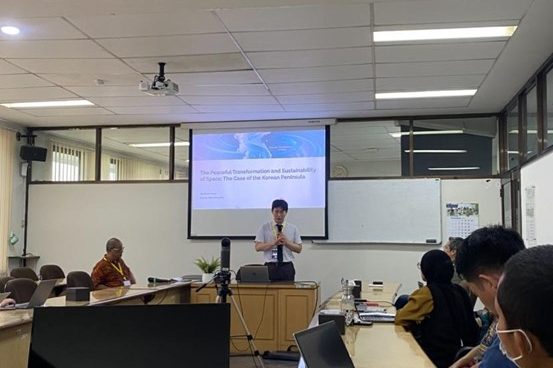
No less interesting, in Panel 12, Rizky Romadhona (UGM) raised the intersection of defense technology and the Sustainable Development Goals (SDGs). His research on “Defense Cooperation and SDGs” examined the impact of the establishment of an Indonesia-Turkey combat drone factory, a unique topic that sparked discussion on ethics, security, and development. In the realm of climate resilience and technology, Afifatul Husna Al Adilah (UGM) from Panel 9 presented the study “Evaluation and Bias Correction of GPM Satellite Rainfall Data…”. This research demonstrated the application of global satellite technology for more accurate rainfall data mapping in Gunungkidul Regency, a concrete example of applying a “glocal” solution for disaster risk management. Continuing in the afternoon, Parallel Session III (14:30 – 16:00 WIB) shifted its focus to issues of governance, geopolitics, and urban resilience. In Panel 13, Dinias Adi Nugroho (UGM) presented his analysis of the “Indonesian Government’s Conflict Style in Responding to the South China Sea Conflict…”. This research delved into Indonesia’s diplomatic strategies and conflict resolution styles in facing one of the hottest geopolitical issues in the region. From the perspective of disaster governance, Muhamad Irfan Nurdiansyah (UGM) in Panel 14 dissected “Institutional Gaps in Disaster Governance” with a case study of the 2022 Cianjur earthquake. His findings highlighted the institutional gaps that need to be addressed to strengthen disaster preparedness in Indonesia. Meanwhile, issues of urban resilience and migration were discussed in Panels 17 and 18. Fahri Admadji (UGM) presented on “Urban Flood Hazard Mapping” in South Sulawesi, while Leonard C Epafras & Heonook Lee (UGM) studied the lives of “Indonesian Muslim Migrants in South Korea” as part of social and transnational resilience. Alongside governance issues, other parallel sessions on the second day also highlighted resilience from cultural, social, and peace perspectives. Researcher from Kyung Hee University, Hyukmin Kang, presented his study on “The Peaceful Transformation and Sustainability of Space: The Case of the Korean Peninsula.”
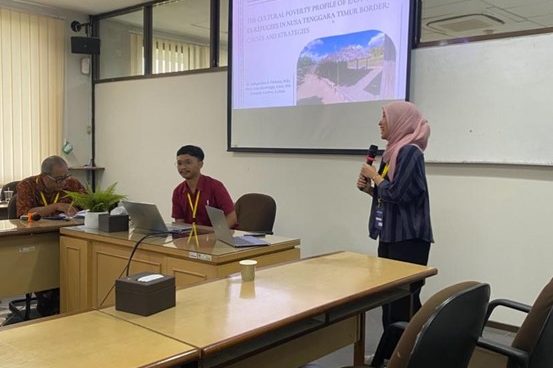
Humanitarian and community issues also emerged. Salsabila Azzahra (UGM) researched “The Cultural Poverty Profile of East Timor Ex-Refugees” on the East Nusa Tenggara border. Meanwhile, Faruk HT (UGM) discussed “Becoming Part of Queer Communities in Yogyakarta: Before and After Digitalization.” On the cultural resilience front, Nur Azizah (UGM) analyzed the transformation “From Ritual to Tourist Attraction” of the Sere Bissu Dance in South Sulawesi. Another unique study came from Nopsi Marga Handayani & Farah Tsabita Huda (UGM), who researched “Digging Through Dispossession,” examining awul-awul (thrifting) consumption at Pasar Legen, Indonesia, as a practice of revaluing waste and lower-class taste.
This series of Parallel Sessions II and III, along with workshops like “Faith for Cities,” further affirmed IGSSCI’s commitment as a platform for interdisciplinary collaboration. The day’s discussions proved that complex global challenges—from geopolitical conflicts and cultural transformations to social justice—require solutions that are globally-minded yet locally relevant and applicable.
Author : Berlian Belasuni