

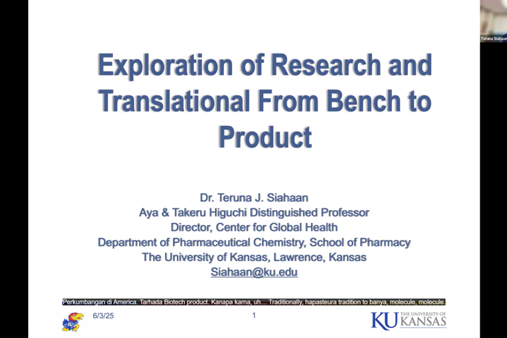
Yogyakarta, June 3rd 2025 – The Biotechnology Program of the Graduate School of Universitas Gadjah Mada (UGM) held a public lecture themed “Scientific Research Methodology” by presenting international scientist, Prof. Teruna J. Siahaan, Ph.D., from Kansas University, United States. The event, which took place on Tuesday night at 20.00-21.30 WIB, was held online with Zoom platform and was open to the public for free. This activity is part of the academic cooperation between UGM and Kansas University, especially in strengthening research capacity and innovation in the field of biotechnology.
This public lecture carries the topic “Bridging Lab and Industry: Translating Knowledge into Innovative Products”, the in-depth discussion was on how basic research in the laboratory can be developed into real products that are applicable and have high use value in society. In his presentation, Prof. Teruna explained that one of the main challenges in the world of research is bridging the gap between scientific discoveries and industrial needs. He emphasized that knowledge translation is not merely a matter of commercialization, but a complex and collaborative process that includes understanding of scientific mechanisms, technology development, and infrastructure readiness.
According to Prof. Teruna, the current research paradigm has shifted from focusing on the isolation of natural compounds to the development of biotechnology products such as recombinant proteins, gene therapy, and monoclonal antibodies. “In the past, most drugs came from small molecules isolated from natural compounds, but now more than 50 percent of new drugs come from biotechnology products,” he said. He cited the success of his basic research in the United States in developing cyclic peptide compounds that have now become generic drugs in the global market, such as integrilin and aggrastat.
Furthermore, Prof. Teruna explained that the process of developing therapeutic products from basic research results is very challenging and requires synergy of academics and industry platforms. Universities, according to him, have the strength in discovery, but to proceed to the preclinical and clinical trial stages requires financial support, regulations, and technology that are generally owned by the industry. Therefore it is important to build cross-sector research collaboration, including support from the government and state-owned enterprises.
“In America, many innovative therapies come from universities, which are then developed by industrial partners into commercial products. This can be adopted in Indonesia with the support of policies that encourage the downstreaming of research results,” he explained.
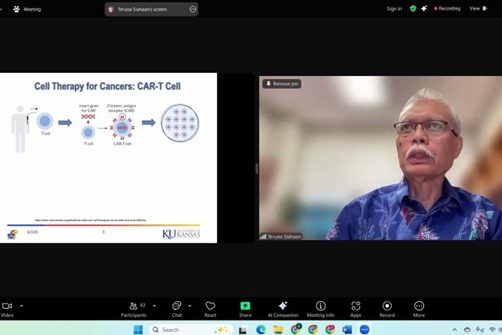
In the session, Prof. Teruna also discussed how a biological mechanism of action-based approach is the key in designing modern therapeutic molecules. He emphasized the importance of basic science in understanding the structure and function of proteins, cellular interactions, and the immune system, as the basis for developing more effective and selective therapies, such as antibody-based therapies that target cancer cells specifically with minimal side effects.
The enthusiasm of the participants could be seen from the many questions asked in the discussion session, ranging from the challenges of downstream research in Indonesia, the role of universities in creating innovation ecosystems, to research opportunities for peptide-based therapies and gene therapy. Participants consisting of students, lecturers, researchers, and practitioners showed high interest in the material presented and appreciated the first-hand experience of a scientist who has been involved in the development of therapies that are now used globally.
This public lecture not only enriches academic insights, but also provides concrete inspiration on how scientific research can have a real impact on the health and welfare of society. Through this activity, the UGM Biotechnology Study Program hopes to continue to build bridges between science and industrial applications, and encourage the spirit of cross-field collaboration in creating sustainable innovation.
Author : Khoirul Mujazanah