
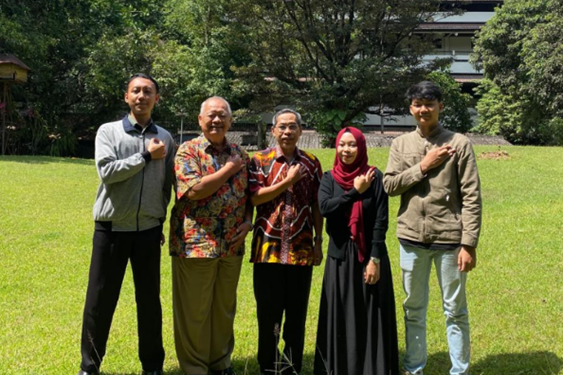
Yogyakarta, October 29th 2025 — Food innovation and farmer welfare have become the focus of the latest research conducted by a team from Universitas Gadjah Mada’s National Resilience Master Program. Over the past few months, the team—comprising two lecturers and three graduate students—has carried out a series of research activities in Delanggu Village, Klaten Regency, to explore the potential of “nuclear rice” in improving the welfare of local farmers.
The study, titled “The Role of Nuclear Rice in Enhancing the Welfare of Local Farmers in Delanggu Village, Klaten, Central Java,” involving Prof. Dr. Armaidy Armawi and Dr. Ahmad Zubaidi, M.Si., along with three National Resilience Master Program: Yusni Muhamad Ali, S.I.P., Ahmad Natsir Ariffikri, S.Hub.Int., and Muhammad Hanif Ramadhani, S.Pd.
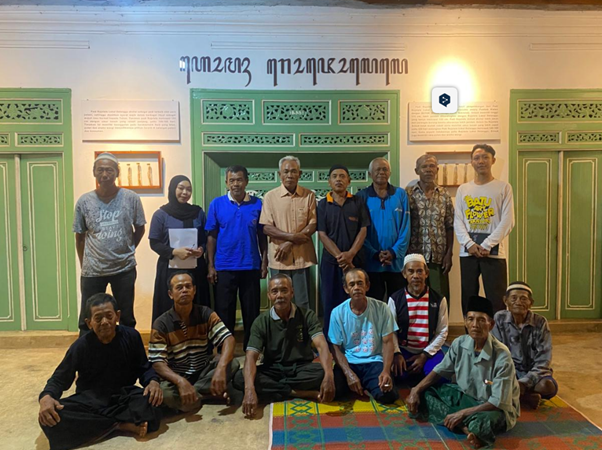
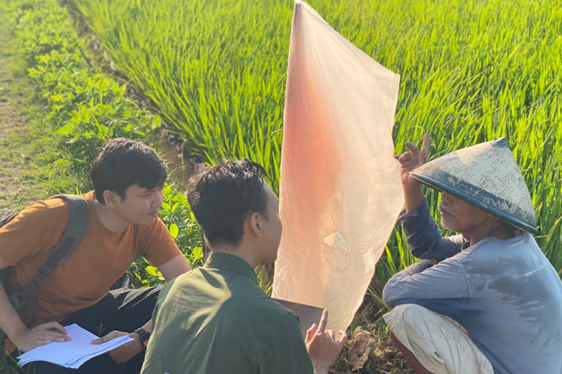
The team has made seven visits to the research site, conducted direct interviews with farmers, and held a Focus Group Discussion (FGD) with 12 farmers on October 12th 2025. These activities not only gathered data but also strengthened dialogue between academics and the rural community.
One of the student team members, Natsi Fikri, explained that this research provided new insights into how food innovation can have a direct impact on community welfare, especially concerning the Rojolele rice variety, which is the hallmark of Delanggu.
“We learned a lot from the farmers. They have an adaptive spirit and are open to new things that can bring positive change,” he said.
The team is currently completing the final stage of analysis and plans to publish the research findings as UGM’s academic contribution to strengthening national food security. This study reflects the synergy between academia and society, showing that science-based innovation can grow from rural areas and contribute to improving farmers’ livelihoods.
The research aligns with the spirit of the Sustainable Development Goals (SDGs), particularly SDG 2: Zero Hunger. Through farmer empowerment and food innovation development, the National Resilience Program team at UGM contributes to creating self-reliant, competitive, and sustainable villages.
Writer: Yusni Muhamad Ali
Editor: Arfikah Istari