
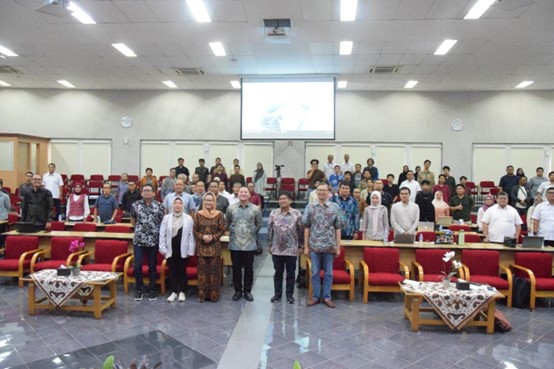
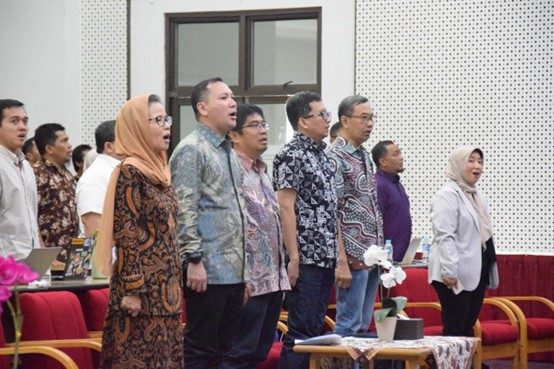
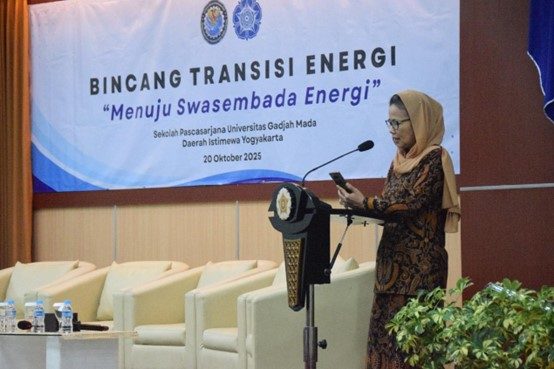
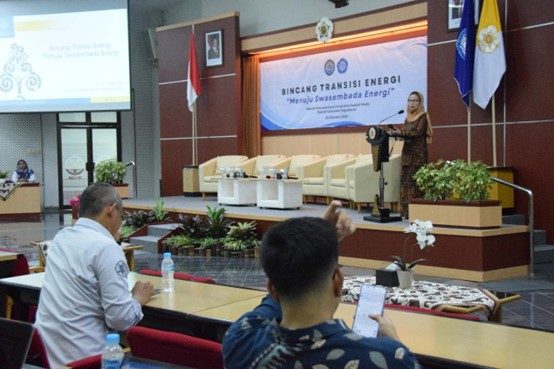
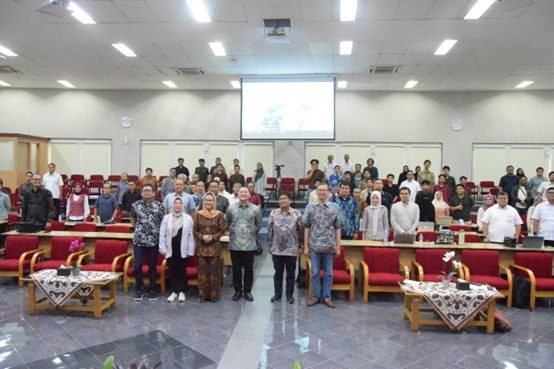
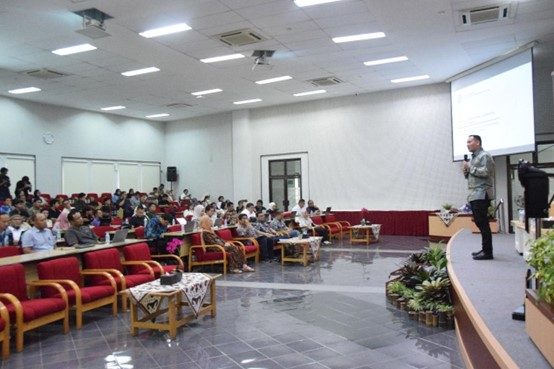
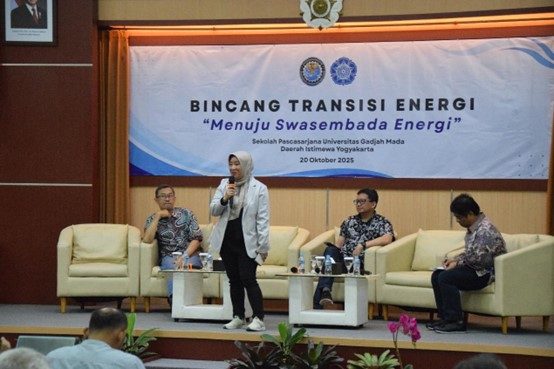
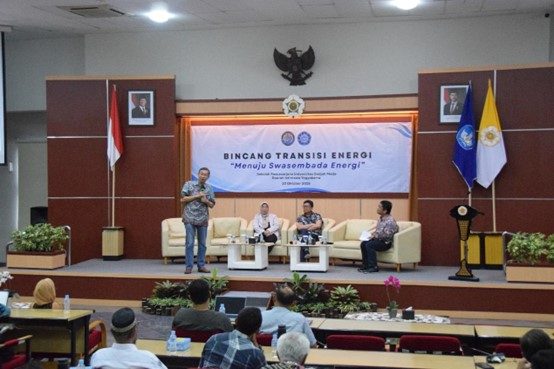
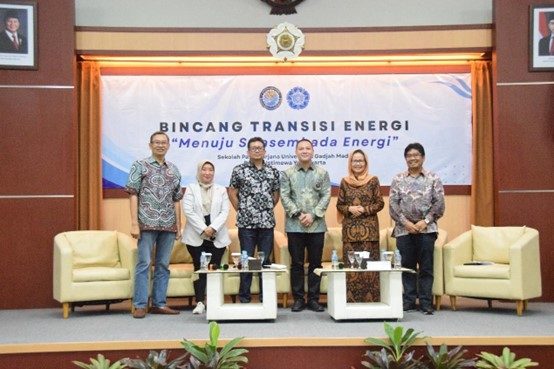
Yogyakarta, October 20th 2025 – The event, titled “Energy Transition Talk: Towards Energy Self-Sufficiency,” was held as a collaboration of the Coordinating Ministry for Infrastructure and Regional Development and the Graduate School of Gadjah Mada University (UGM). This event focused on accelerating the energy transition towards national energy independence, a strategic issue that has attracted widespread attention from academics, government, and the public.
In the opening ceremony, Rahmat Kaimudin introduced himself and explained his experience in the energy transition, including his role in the Just Energy Transition Partnership and the Energy Transition Task Force. He emphasized the importance of cross-sector collaboration in realizing a just and sustainable energy transition.
Three speakers also presented, discussing diverse perspectives on the energy transition. Dr. Ardianto Fitradi discussed the techno-economic aspects, highlighting the energy transition as a global public good brought broad benefits, with major challenges such as dependence on subsidized fossil fuels, low demand for renewable energy, and limited supporting infrastructure.
Prof. Mailinda Eka Yuniza, from a legal and policy perspective, explained that one of the main obstacles of investment in new and renewable energy (EBT) in Indonesia is regulatory uncertainty. She emphasized the importance of legal certainty for investors and highlighted various national and international initiatives such as the UNFCCC, the Paris Agreement, the New and Renewable Energy Bill (RUU EBET), and the National Energy Policy (PPKEN). However, she considered the renewable energy targets in the latest policies to be insufficiently ambitious because acceleration is only planned after 2050.
Meanwhile, Drajat Sulistio Widiharto discussed the social aspects of the energy transition, emphasizing that energy development cannot be separated from the social context. He highlighted social issues such as job shifts due to technological change, community relocation due to energy projects, and the disparity in energy access of urban and rural areas. Land conflicts and customary law, particularly in Eastern Indonesia, were also cited as major challenges to energy policy implementation. He emphasized that a successful energy transition requires social transformation and active community participation. He argued that without a comprehensive sociological approach, the energy transition risks deepening inequality and giving rise to social conflict.
The speakers, with this event, hoped to foster synergy between the government, academics, and the community to accelerate the path towards equitable, inclusive, and sustainable national energy self-sufficiency.
Author: Elisa Cahya Kristiana
Editor: Burhanul Aqil