
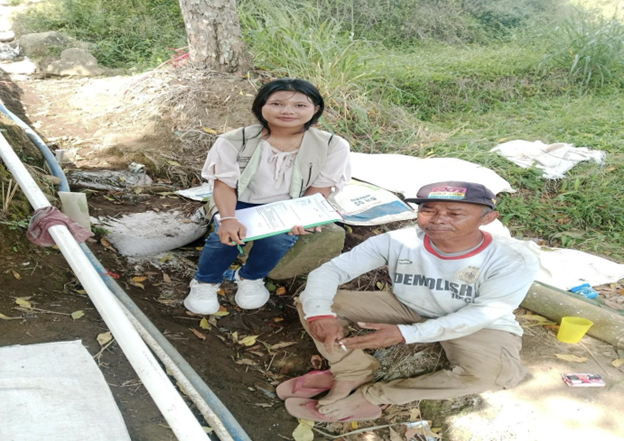
Yogyakarta, 13th January 2026 — The Environmental Science Master Program, Graduate School of Universitas Gadjah Mada (SPs UGM), with the 2025 Research Grant, has conducted a study entitled “Digital Transformation: Challenges and Opportunities in Enhancing Sustainable Food Security in Tejamulya Village, Argapura District.” The research is led by Dr. Sudrajat, S.Si., M.P., with Prof. Dr. Ig. L. Setyawan Purnama, M.Si., as a member of the research team, and involves students of the Environmental Science Master Program, namely Heri Wijaya, S.Si., and Marwan Rajab, S.Hut.
The findings indicate that digital transformation in Tejamulya Village, Argapura District, Majalengka Regency, has begun to deliver tangible benefits for farmers. The use of digital technology has helped farmers access information related to agricultural production factors, streamline the distribution of harvests, and open wider market opportunities with both online and offline channels.
The principal investigator, Dr. Sudrajat, S.Si., M.P., explained the utilization of digital technology as a crucial factor in addressing food security challenges in rural areas. “Digital transformation in the agricultural sector not only facilitates farmers’ access to information and markets. It also improves production efficiency and strengthens sustainable food security. However, this process must be supported by adequate policies and infrastructure therefore the benefits can be felt equitably,” he stated.
These findings suggest the adoption of digital technology in agriculture has transformed farming practices to be more effective and efficient. The application of such technology contributes to increased agricultural productivity and represents an important effort toward achieving sustainable food security.
Nevertheless, the study also reveals several challenges the farmers are still facing in the digital transformation process. Key obstacles included limited internet connectivity in rural areas, low levels of digital literacy among elderly farmers, and operational costs of technology that are still perceived as relatively high. These conditions highlight the need for serious attention from local governments to ensure the ongoing digital transformation process can be implemented optimally and inclusively.
Most farmers also recognize the significant opportunities offered by digital technology, both in agricultural production and management activities as well as in marketing systems. Digital technology is considered capable of expanding marketing networks, enhancing the competitiveness of agricultural products, and positively contributing to food security by facilitating distribution, access, availability, and food stability.
Based on these findings, the study emphasizes the importance of formulating well-targeted strategies and policies to support the acceleration of digital transformation among farmers in Tejamulya Village, Argapura District, Majalengka Regency. Policies requiring particular attention include the provision of internet infrastructure, the enhancement of technological literacy for farmers, and operational cost support. These measures are regarded as key factors in strengthening food security.
Source: Sudrajat
Editor: Asti Rahmaningrum
Photo: Sudrajat