
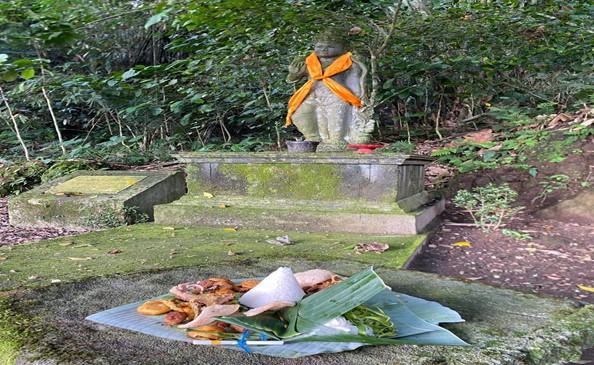
Yogyakarta, 12th January 2026 – Dusun Krecek, located in Getas Village, Kaloran Sub-district, Temanggung Regency, Central Java, offers a compelling example of the integration of religious practices and environmental conservation efforts. The majority of its residents, who adhere to Buddhism, incorporate spiritual rituals with ecological values in their daily lives.
This phenomenon is revealed in a study entitled “Decolonizing Buddhism: Local Agency and Ecospiritual Practices” conducted in 2025 by Dr. Yulianti, a lecturer in the Religion and Cross-Cultural Master Program at the Graduate School of Universitas Gadjah Mada (SPs UGM). The study demonstrates religious practices in Dusun Krecek serve as forms of worship but also carry profound ecological significance. The research was conducted with field observations, interviews with local residents, and an analysis of local historical documents.
The celebration of Vesak in Dusun Krecek involves practicing ritual ecology, integrating Buddhist teachings with Javanese traditions such as selamatan, nyadran, and mujut. Rather than being abandoned, these traditions are preserved and reinterpreted within a Buddhist framework. According to Dr. Yulianti, this process reflects the local community’s agency in interpreting religious teachings. “Javanese traditions are maintained and given new meanings within the framework of Buddhism, thereby fostering a collective spiritual awareness that contributes to the preservation of local ecosystems,” she explained.
Dusun Krecek is home to 218 residents across 86 households. Since the mass conversion to Buddhism in the 1960s and 1970s, the community has successfully adapted religious values to support the sustainability of their agricultural sector, particularly in the cultivation of coffee and vegetables.
Environmental conservation efforts are also manifested through the sacralization of trees and springs via various religious rituals. This practice illustrates how religion can play a direct role in shaping ecological behavior in rural communities. “The sacralization of nature with ritual functions as an effective social mechanism for ensuring the sustainability of natural resources,” Dr. Yulianti noted.
Nevertheless, the study also highlights ongoing challenges, particularly in the transmission of values and traditions to younger generations. Overall, however, the people of Dusun Krecek have implemented sustainability principles that align with the Sustainable Development Goals (SDGs), especially Goal 13 on Climate Action and Goal 15 on Life on Land.
Source: Yulianti
Editor: Asti Rahmaningrum
Photo: Yulianti