
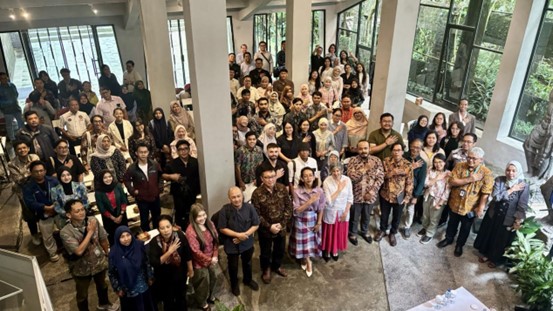
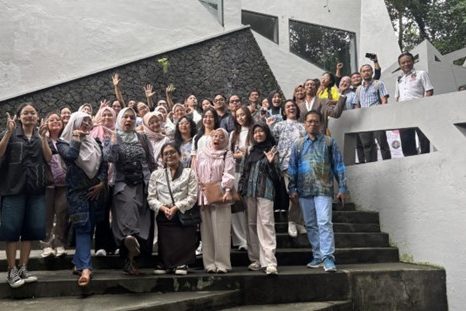
Yogyakarta, February 20th 2026 – Museum collections are no longer viewed merely as inanimate objects displayed behind glass cabinets, but rather as dynamic cultural entities whose meanings are continuously kept alive. This spirit emerged during the inaugural International Museum Forum, titled “Heritagisation of Museum Collections,” held at the Ullen Sentalu Museum, Sleman, on Tuesday (Feb 10). The bilingual event is the result of a strategic collaboration of the Ullen Sentalu Museum, Karaton Ngayogyakarta Hadiningrat, The British Museum London, the Faculty of Cultural Sciences UGM, and the Performing Arts and Visual Arts Studies (PSPSR) Program of the Graduate School, Universitas Gadjah Mada (UGM).
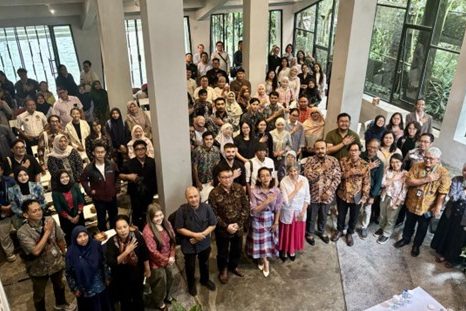
Carrying the main theme of heritagization, the forum highlighted the importance of transmission’s value process to revitalize various historical artifacts. This cultural preservation process was emphasized to go beyond static exhibitions; it must involve in-depth research, continuous reinterpretation, collaborative art performances, and comprehensive scientific documentation in the form of proceedings. With the dozens of graduate students and academics’ participation, the event is expected to serve as a platform for knowledge exchange, bridging contemporary museological practices with academic discourse in higher education.
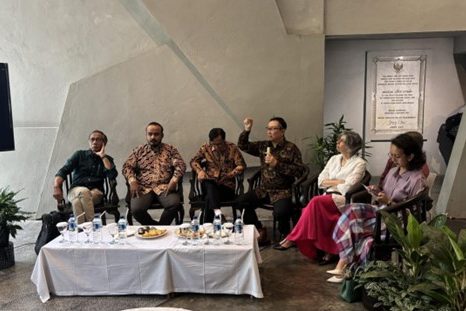
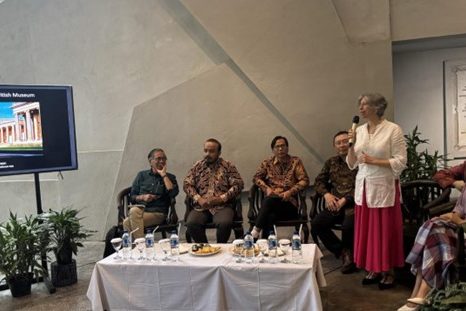
Hosted by Dr. Rr. Paramitha Dyah Fitriasari, M.Hum., the forum dissected historical collections from the diverse perspectives of experts. The study began with a museological perspective by Daniel Haryono, M.Hum., who also served as the moderator, followed by an invaluable presentation by GKR. Bendara, M.Sc., on the philosophy and cultural preservation efforts within the royal palace (keraton). Global insights were then presented by the Curator of The British Museum, Dr. Alexandra Green, who discussed the accessibility and management of Southeast Asian collections in London. The discussion deepened when UGM history expert, Dr. Sri Margana, reviewed a comparative study of the Serat Damarwulan manuscript, followed by Dr. Rudy Wiratama’s analysis regarding the early 19th-century wayang (shadow puppet) collection belonging to The British Museum. The series of presentations concluded with a comprehensive summary by Dr. G.R. Lono L. Simatupang, who underscored the urgency of synergy of museums as centers of preservation and universities as centers of knowledge production.
The interactive discussion session was marked by high enthusiasm from the offline participants, who highlighted various crucial issues—ranging from assigning meaning to cultural heritage objects to technical conservation challenges, such as finding alternative materials to replace leather in wayang making. Responding to the dynamic discussion, Dr. Alexandra Green offered highly thought-provoking closing remarks on interpreting a historical object. She emphasized that there is no single truth in viewing an artifact, as the same object can hold vastly different meanings for different people. Therefore, the primary duty of institutions today is to protect, preserve, and provide the widest possible access by presenting all these diverse narratives to the public.
Author: Berlian Belasuni