

Bullying refers to any actions that harm students, carried out by an individual or a group of people outside or unrelated to the processes of education, research, or services, according to the regulations of the Minister of Health.
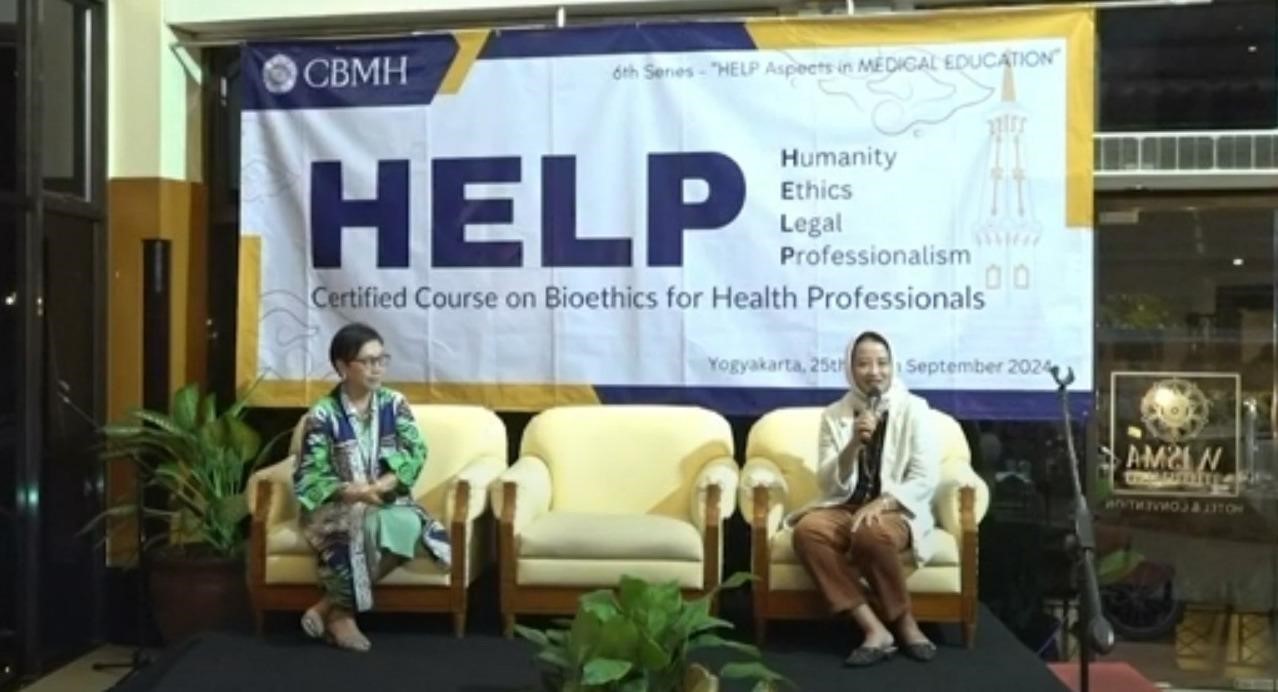
Bullying includes physical bullying, verbal bullying, cyberbullying, and other forms of non-physical and non-verbal bullying. This was stated by Prof. Yayi Suryo Prabandari, a Professor at FKKMK UGM, one of the speakers at the “Angkringan” Help Aspects in Medical Education series 6 with the theme “Humanity Ethics Legal Professionalism (HELP) Certified Course on Bioethics for Health Professionals,” on September 25th 2024.
Physical bullying refers to actions such as hitting, pushing, biting, pulling hair, kicking, locking someone in a room, pinching, scratching, as well as extortion, damaging someone else’s property, and sexual harassment.
Verbal bullying includes threatening, embarrassing, belittling, disturbing, name-calling, sarcasm, mocking, intimidation, cursing, and spreading unverified news.
Cyberbullying involves actions that hurt or harm others using electronic media, such as disseminating false news or videos with the intent to provoke or defame someone.
Other forms of non-physical and non-verbal bullying include actions like ostracizing, ignoring, sending threatening letters (blackmailing), assigning unreasonable tasks, requesting funding for curricular or extracurricular activities, or other expenses beyond the established education fees.
According to Prof. Dr. Mora Claramita, MHPE, Ph.D., Sp.KKLLP, also a professor at FKKMK UGM and a speaker at the event, bullying is influenced by social hierarchies, such as sibling relationships, parent-child dynamics, community leaders with their members, teachers with students, doctors with patients, and the seniority of nurses and pharmacists.
Regarding the curriculum in medical education, Prof. Mora shared her study from 2020 to 2023, which involved focus group discussions with clinicians, non-clinicians, medical students, interns, and residents. The responses indicated that the medical education curriculum lacks constructive feedback, making feedback construction a significant theme.
Furthermore, Prof. Yayi added that bullying can be addressed through several methods, including examining the causes, defining the boundaries of bullying, reassessing educational costs and supports, changing the campus climate, developing norms for behavior, and implementing these measures comprehensively while involving the entire campus and hospital community.
This initiative aligns with the implementation of SDG 4 on Quality Education, SDG 10 on Reduced Inequality, and SDG 16 on Peace, Justice, and Strong Institutions.
Author: Arni Wistriatun
Editor: Ana Anggraini