
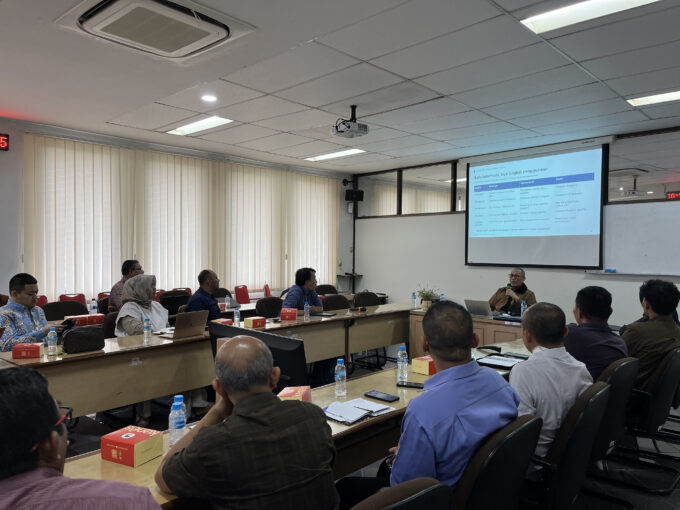
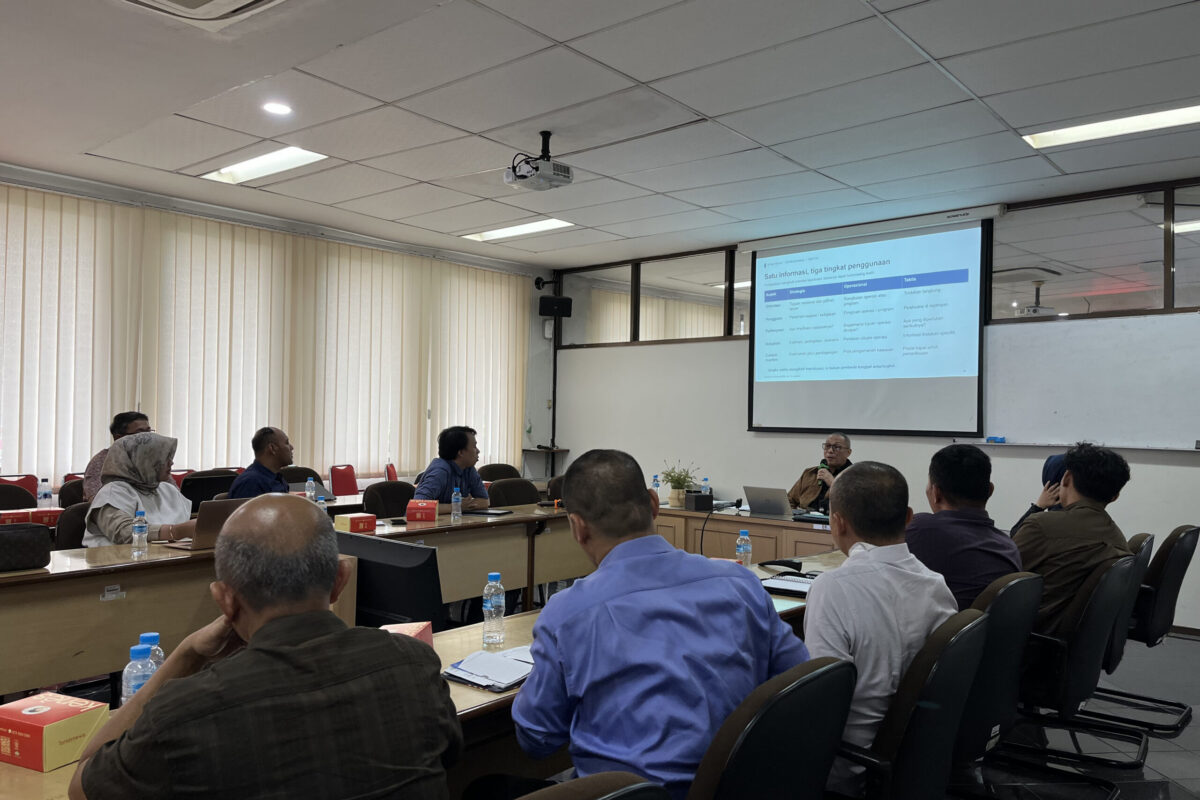
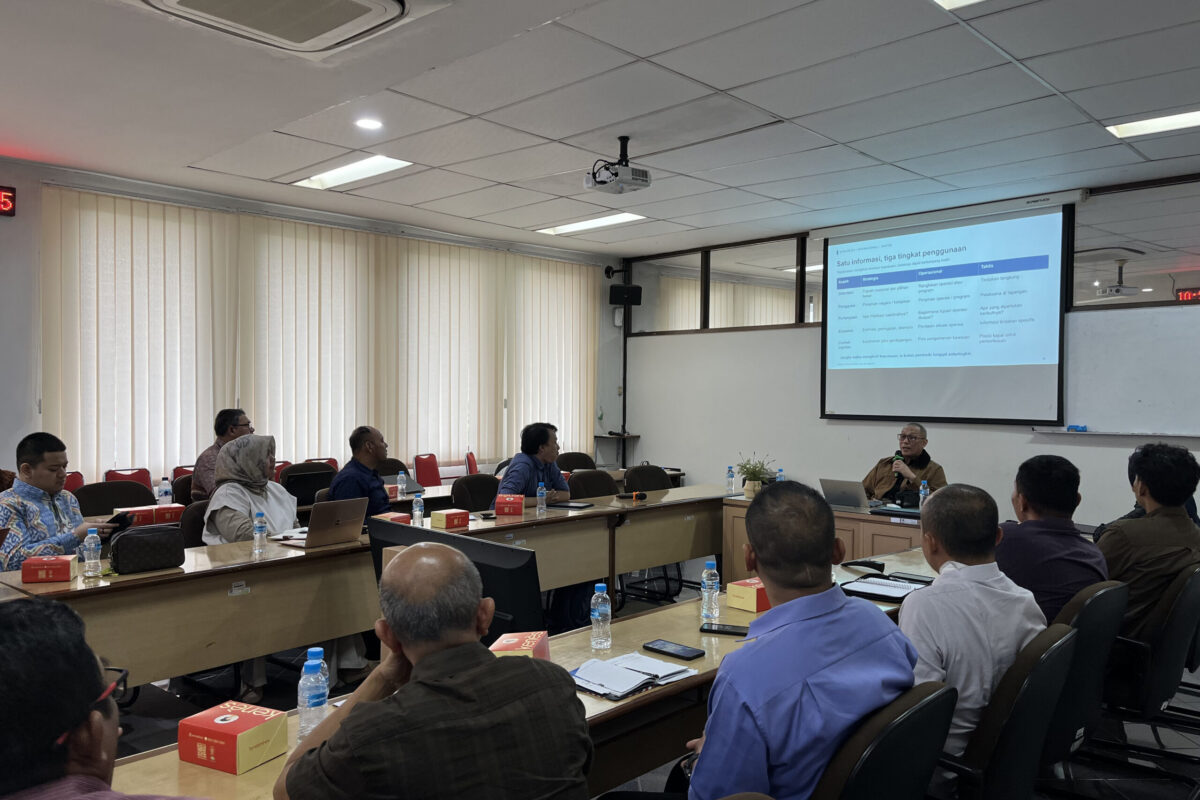
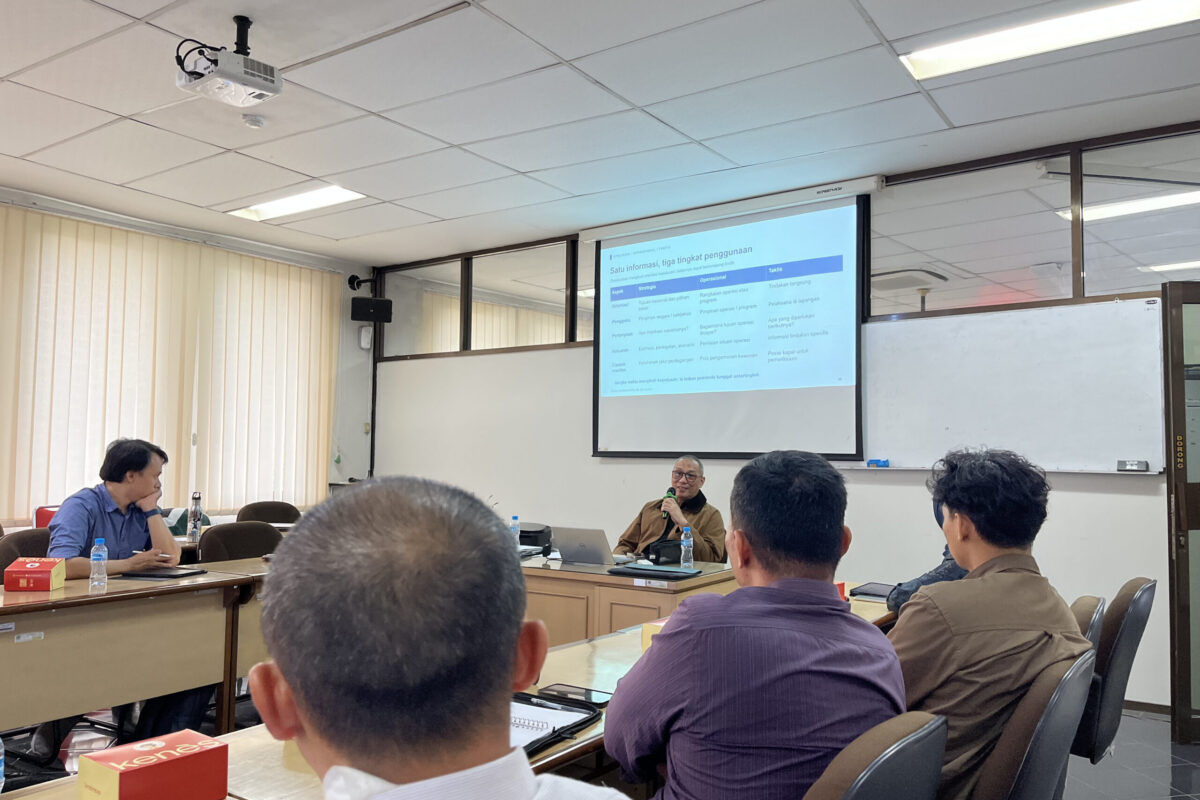
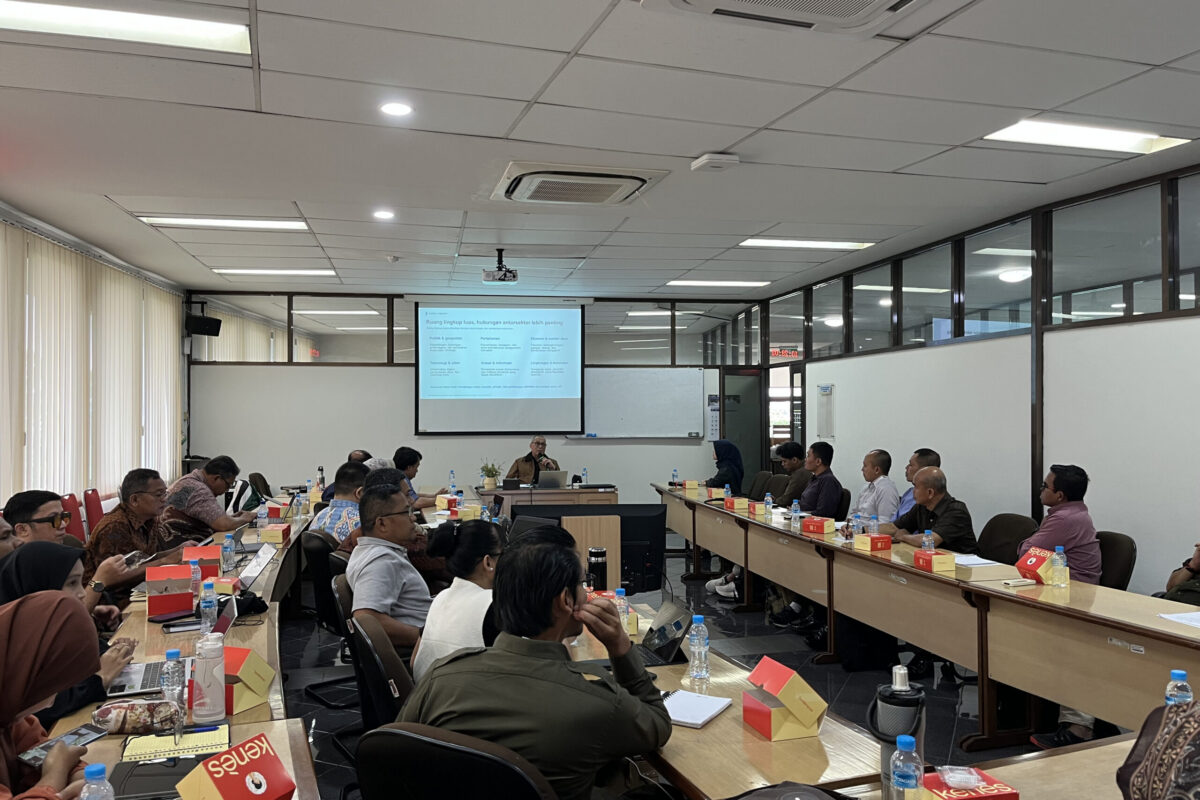
Yogyakarta, November 6th 2026 – Amid increasingly complex global dynamics, the ability to interpret information, identify risks, and anticipate the impacts of policies is essential to maintaining national resilience. Strategic intelligence is not merely about gathering information; it also involves connecting various facts to help decision-makers anticipate potential developments and make informed decisions.
This perspective was the central theme of a guest lecture entitled “Paradigms and Strategic Intelligence,” organized by the National Resilience Doctoral Program Graduate School of Universitas Gadjah Mada (SPs UGM). The lecture featured Rear Admiral (Ret.) Prof. (H.C.) Dr. Ivan Yulivan, S.E., M.M., CHRMP., M.Tr. (Han.), former Governor of the State Intelligence College (STIN) in 2020. Approximately 35 students from the National Resilience Master’s and Doctoral Programs, as well as the Peace and Conflict Resolution Program, attended the event.
Prof. Ivan, in his presentation, highlighted the importance of understanding issues with three levels: strategic, operational, and tactical. He illustrated this framework using the example of a trip to Germany. The strategic level addresses why someone needs to travel there, the operational level explains how to get there, and the tactical level covers practical steps, such as purchasing a ticket.
The same framework can be applied to safeguard maritime trade routes. At the strategic level, the state must ensure the continuity of supply chains. At the operational level, it must establish security arrangements in vulnerable areas such as the Strait of Malacca. Meanwhile, at the tactical level, concrete measures include deploying patrol vessels to the area. These three levels must be analyzed in an integrated manner, as even technical issues can have broader implications for national interests.
Furthermore, he emphasized that the primary objective of strategic intelligence is to reduce uncertainty for decision-makers. Therefore, information must be analyzed across multiple sectors, including politics, defense, economics, technology, social affairs, the environment, and health. Such analysis must also be supported by credible sources, sound reasoning, appropriate methodologies, and traceable information.
The potential, as an example, threat of a prolonged dry season to national rice production cannot be assessed with a single academic discipline. It requires contributions from experts in meteorology, climatology, and soil science to produce a comprehensive assessment. He also reminded participants to remain vigilant against information manipulation that could influence decision-making processes. “What if that information is deliberately spread to make us uncertain?” he remarked.
Prof. Ivan also stressed the importance of understanding the intelligence cycle, which encompasses intelligence requirements identification, collection planning, information processing, analysis, dissemination, and feedback. Any new information that emerges must be reassessed to ensure that decisions remain relevant to evolving circumstances.
Concluding his presentation, he emphasized that intelligence awareness should not be the sole responsibility of intelligence and security personnel but should become a way of thinking for every citizen. “Intelligence awareness should not be limited to government personnel; it must become a way of thinking for every citizen,” he stated.
This guest lecture showed students are expected to strengthen their ability to critically understand issues, recognize cross-sectoral interconnections, and develop strategic perspectives in addressing various challenges to national resilience.
Writer: Novita
Editor: Arfika