
Yogyakarta, 4th February 2026 — A research team from the Environmental Management Study Interest, Graduate School of Universitas Gadjah Mada (UGM) has successfully characterized the hydrogeochemistry and origin of groundwater in the young volcanic aquifer system of the eastern slopes of Mount Ungaran, Semarang Regency. The project was led by Dr. Tjahyo Nugroho Adji, MSc.Tech, and supported by a multidisciplinary hydrogeology and environmental science team.
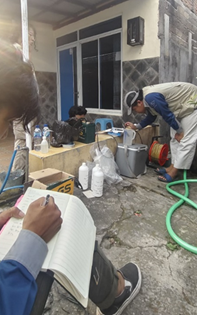
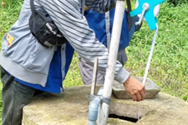
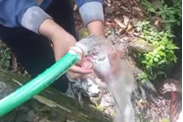
Conducted from March to November 2025, the study involved sampling from dug wells and springs across Ungaran Barat, Ungaran Timur, and Bergas Districts. The hydrochemical analysis revealed that most groundwater samples fall within the Ca–HCO₃ and Ca–Mg–HCO₃ water types, characteristic of meteoric recharge interacting with volcanic minerals. The research also identified spatial variation in dissolved metals—including Fe and Mn—and detected anthropogenic influence at certain downstream sites.
“The integrated use of hydrogeochemistry and stable isotopes allows us to trace groundwater sources and identify both geological and human-driven factors affecting water quality,” stated Dr. Tjahyo Nugroho Adji.
These findings play a crucial role in advancing sustainable groundwater management and directly support SDG 6: Clean Water and Sanitation, which aims to ensure availability of clean, safe, and resilient water resources. Although the groundwater in the study area is generally suitable for use, the results highlight areas where quality may be compromised due to land-use change, urbanization, and agricultural practices.
Based on the research outcomes, the team recommends continuous monitoring of groundwater quality and the development of conservation strategies informed by scientific evidence. The study is expected to become a valuable reference in future water-resource planning for domestic, industrial, and agricultural needs in Semarang Regency.
Source: Tjahyo Nugroho A
Editor: Asti Rahmaningrum
Photo: Tjahyo Nugroho A