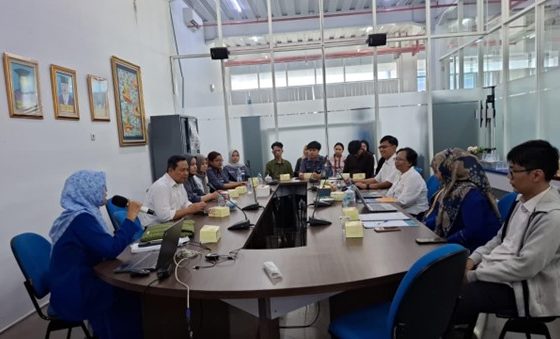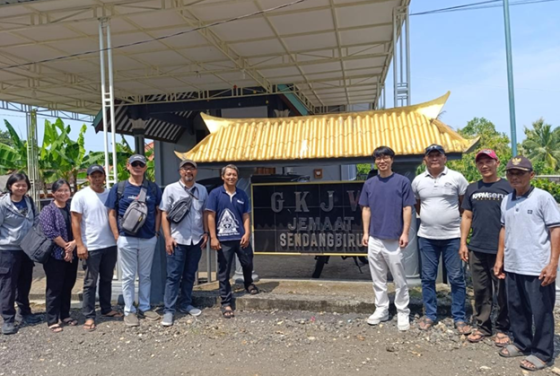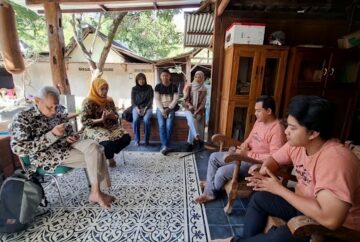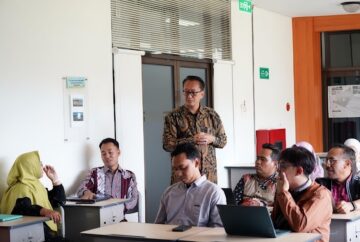
Yogyakarta, November 3rd 2025– Bridging the gap of rigid academic theory and on-the-ground social realities. This was the primary spirit of the “Social Research Workshop” organized by the Inter-religious Doctoral Program (IRS) at the Graduate School of Universitas Gadjah Mada (UGM). In collaboration with the Percik Salatiga Foundation, the event, held from October 31st to November 1st 2025, was designed to encourage doctoral students to “step down” from the “campus” ivory tower and learn directly from the “pulse” of community life. The workshop was attended by doctoral students from their first to third semesters who are currently preparing their dissertation proposals. The objective was clear: to enrich their understanding of social research methodologies oriented toward community empowerment. The event was centered at Yayasan Percik, an independent institution that has been dedicated to social research, democracy, and social justice since 1996. Its founders include scholars, social researchers, academics, and activists focused on community organizing. On the first day, senior researchers from Percik, including Dr. Haryani Saptaningtyas, Dr. Pradjarta Dirdjosanjoto, and Slamet Luwihono, S.H., M.Si., shared their flagship method: Participation Documentation Research (PDR).
The PDR method was more than just a data collection technique. It is a research approach that combines research with advocacy and empowerment processes. “Researchers do not just collect data; they actively participate in the community’s social dynamics,” explained one of the speakers. “The goal is for the research results to have a tangible impact on fostering a more democratic and just social change.” The speakers from Percik, such as Ambar Istiyani, S.E., M.Si, Agung Waskitoadi, S.H., M.Si, and Dwi Wuryaningsih, S.H., demonstrated how research can be an effective tool for social transformation, reducing the gap between the “campus” and the “community.” This humanistic spirit was reinforced on the second day by Prof. Dr. Izak Y. M. Lattu from Satya Wacana Christian University (UKSW). He delivered a reflective presentation on the importance of empathy in social research. According to Prof. Izak, researchers need to shift their perspective and position the community at the research site as “teachers” who can provide valuable knowledge and authentic perspectives. “Many small things in community life can be sources of meaningful research,” said Prof. Izak. “Through empathetic research, we not only learn from the community but also contribute to introducing Indonesia’s local values to the world.”
This “down-to-earth” approach was acknowledged by the student participants for opening new horizons, which they rarely encounter in formal classrooms. Marno Nigha, one of the students, expressed that the event offered a distinctly different learning experience. “This workshop was highly beneficial because we could learn directly from the speakers’ real-world field experiences,” said Marno. “We now understand how the research process can directly intersect with community empowerment activities.” Echoing this sentiment, Royyan Nafis expressed his gratitude for the opportunity to learn the PDR method in depth, something he felt is not sufficiently discussed in academic circles. “I feel very fortunate to learn the PDR method from Yayasan Percik. Methods like this are not often discussed in academic spaces on campus,” said Royyan. “This type of workshop model must continue because it is crucial for us to learn directly from researchers who are also involved in advocacy and community development.”
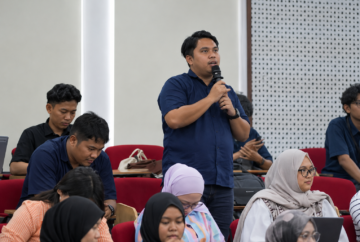
The workshop culminated in a dissertation proposal discussion session, where students presented their research plans. The Percik speakers provided critical and reflective feedback, challenging the students to orient their research more toward citizen participation and social advocacy. This event underscores the commitment of the UGM-IRS Doctoral Program to strengthening students’ capacities in interdisciplinary and participatory research. The hope is that these doctoral candidates will produce research that is not only academically robust but also humanistic, advocacy-oriented, and capable of contributing to a more just and equitable social transformation.
Author: Berlian Belasuni