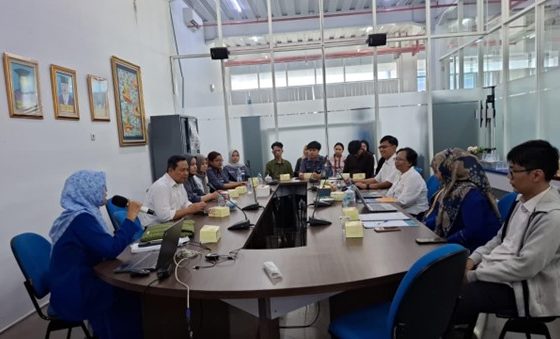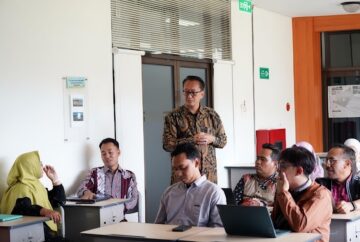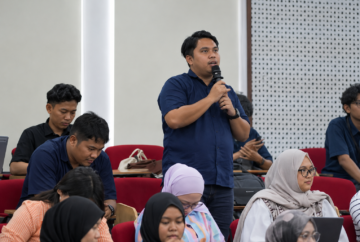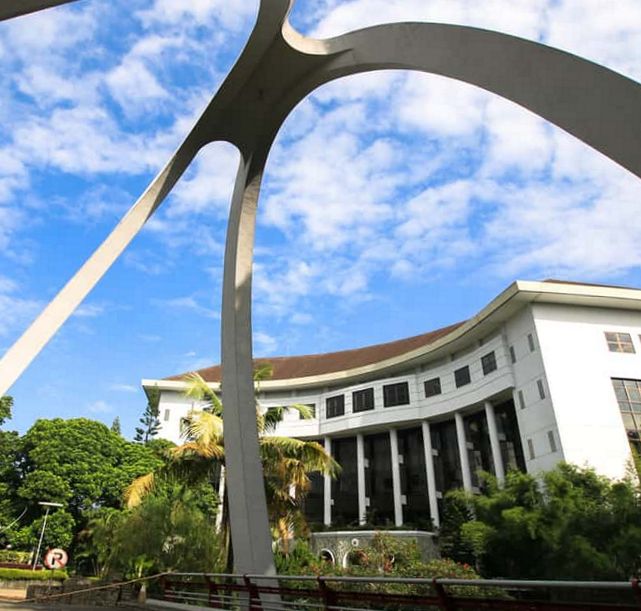
The Biomedical Engineering master program, Graduate School of Universitas Gadjah Mada (UGM), in collaboration with National Cheng Kung University (NCKU), Taiwan, held a webinar at the Auditorium Room, UGM Graduate School Building, on Tuesday, June 17th 2025.
The webinar, themed “Future Healthtech: Interdisciplinary Breakthroughs in Biomedical Innovation,” featured four distinguished speakers from NCKU: Prof. Fong-Chin Su, Prof. Ming-Long Yeh, Prof. Kuo-Sheng Cheng, and Prof. Yeau-Ren Jeng.
Moderated by drg. Aryan Morita, M.Sc., Ph.D, a lecturer from the Biomedical Engineering master program (also affiliated with the Faculty of Dentistry, UGM), the speakers presented the latest research and innovations in the field of biomedical engineering.
The webinar followed a memorandum of cooperation signing ceremony between UGM Graduate School and NCKU.
The event was officially opened by Prof. Ir. Siti Malkhamah, M.Sc., Ph.D, Dean of the UGM Graduate School, who expressed her appreciation for the partnership between UGM and NCKU in strengthening academic and international research collaboration.
Prof. Fong-Chin Su, Chair Professor and Executive Director of the Taiwan-Thailand Science and Technology Center at NCKU, presented on “Medical Devices Innovation.” He discussed the long-standing development of Biomedical Engineering at NCKU, highlighting the establishment of the Medical Device Innovation Center since 2011, now entering its third generation in 2023. He emphasized NCKU’s comprehensive innovation ecosystem—spanning education/research, innovation, and entrepreneurship. NCKU has produced over 300 high-impact scientific publications and 35+ medical device products, including bioactive bone cement. NCKU also ranks first in Taiwan for startup incubation and was the first Taiwanese university to receive ISO 13485 certification (2014) and Medical Device Manufacturer & Dealer Approval (2021).
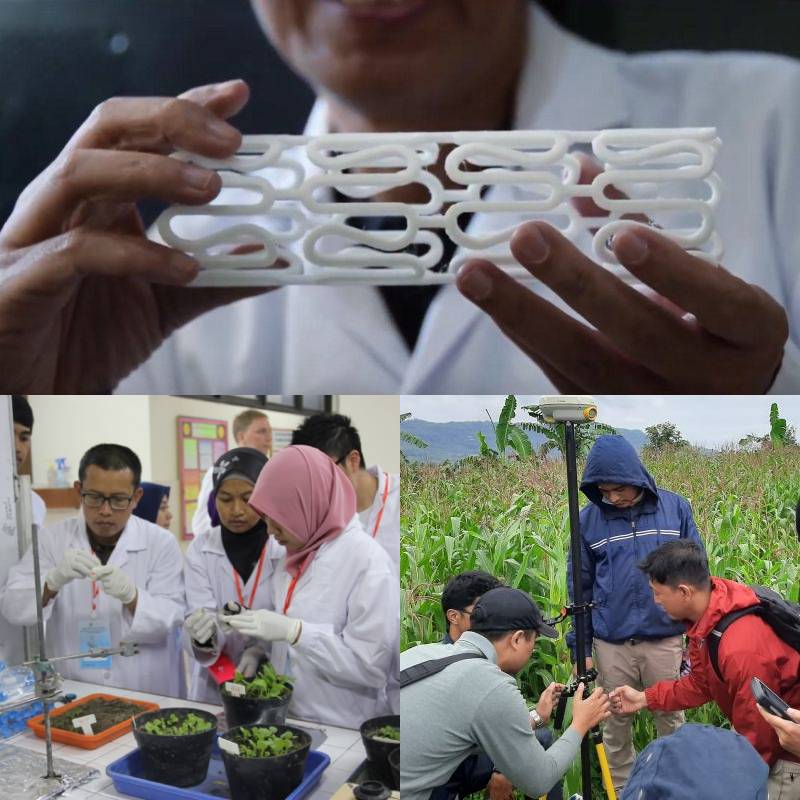
Prof. Ming-Long Yeh from the Department of Biomedical Engineering and Director of the Startup & Acceleration Center, presented “Processing and Applications of Degradable Metal in Biomedicine.” His research focuses on cartilage tissue engineering, degradable metals, orthopedic biomechanics, biocompatibility testing, PVD detection, drug-eluting balloons, and wound healing devices. He explained how biomaterials are classified—metals, polymers, ceramics, and composites—with polymers and ceramics often being biodegradable. Magnesium (Mg) is highlighted as an essential element in the human body (21–28g in adults), with over 50% in bones. Mg improves bone elasticity and promotes osteoblast differentiation. His findings show that fluorination treatment enhances corrosion resistance and cell biocompatibility, enabling clinical applications such as ligature wires, plates, coronary stents, and orthopedic screws.
Prof. Kuo-Sheng Cheng, Professor in the Department of Biomedical Engineering and Director of the Department of Medical Engineering at NCKU Hospital, presented “The Image Analysis in Medical Applications.” He shared research on the correlation between dynamic and static features of the digital clock drawing test (dCDT) and CASI (Cognitive Abilities Screening Instrument) for early dementia detection. Dementia, often caused by cerebral strokes or multiple infarcts, lacks a cure, making early detection critical. The dCDT is effective due to its engagement of cognitive functions such as attention, auditory comprehension, memory, executive function, and visuospatial ability. Prof. Cheng also introduced Electrical Impedance Tomography (EIT), a non-invasive, radiation-free imaging method increasingly used for dynamic muscle function analysis and in cardiopulmonary applications.
Prof. Yeau-Ren Jeng delivered insights on “Bio-Tissue Analysis with a Multimodal Multiscale Approach.” He discussed the structure and function of intervertebral discs (IVD), crucial for protecting nerves and limiting joint movement. Early detection of IVD degeneration remains challenging due to limitations in imaging, biomarker variability, and post-operative treatment. A multimodal approach is essential to identify early biochemical and microstructural cues. He also shared findings on the surface hardness and biomechanics of teeth from three types of animals: herbivores, carnivores, and omnivores.
Prof. Han-Sheng Chuang presented on “Innovation in Bead-Based Biosensing Technologies in Biomedical Applications.” He introduced cutting-edge bead-based biosensing methods capable of detecting bacteria, viruses, proteins, exosomes, and nucleic acids. He also explained BMOEMS (Bio-Micro-Electro-Mechanical Systems) technologies such as photonic crystal biosensors, optical diffusometry, rapid electrokinetic patterning, and SAW-driven microfluidic chips. One key innovation—the SAW-driven immunosensing chip—enables ultra-rapid immunoassays (about 2 minutes) without electrical conductivity constraints. He also highlighted the use of optical diffusometry for rapid antibiotic susceptibility testing (AST) and detection of trace protein biomarkers.
The webinar was attended by around 100 participants, including students, faculty, researchers, and biomedical engineering professionals from various institutions.
This event supports the achievement of the Sustainable Development Goals (SDGs), particularly SDG 4 (Quality Education) and SDG 17 (Partnerships for the Goals).
Writer: Vincen Santosa
Editor: Arni W