
On April 28th 2025, the Cultural and Media Studies Program hosted a seminar entitled “Digital Indonesia: Towards Inclusion and Empowerment in Indonesia’s Digital Era.” The event was organized by the Cultural and Media Studies Program in collaboration with DAAD (Deutscher Akademischer Austauschdienst).
The seminar was opened by singing the Indonesia Raya song, followed by remarks from the Chairperson of the Committee, Ratna Noviani, SIP, M.Si., Ph.D., who expressed her welcome to all participants and appreciation for the enthusiasm of the attendees. After Ratna’s speech, Dr. Guido Schnieders, Director of DAAD Jakarta, also gave a speech and briefly explained the history of DAAD, which this year turns 100 years old globally and has been present in Indonesia for 35 years. On this occasion, Dr. Schnieders also explained the DAAD 2030 strategy and invited alumni to be actively involved by accessing the official DAAD website, which now includes the DAAD Indonesia Alumni e-book as part of the 35-year celebration of DAAD’s work in Indonesia.
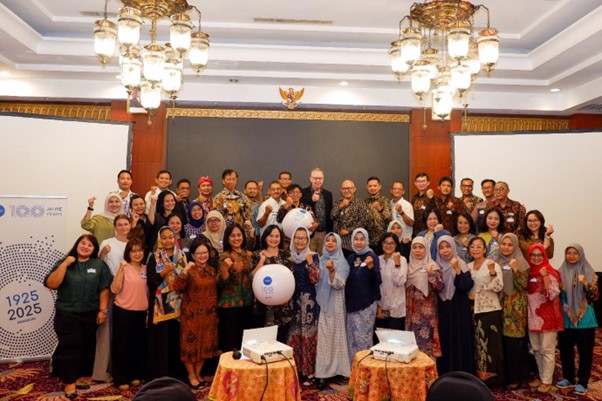
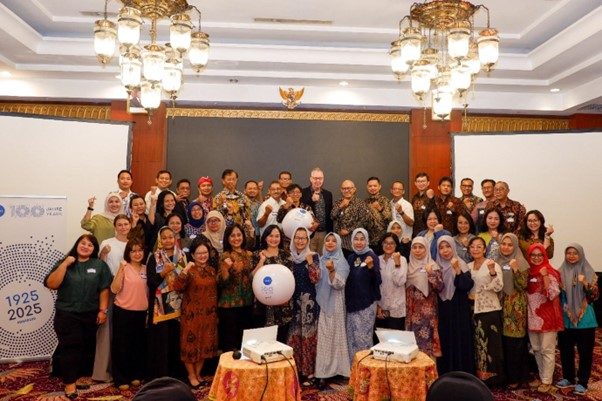
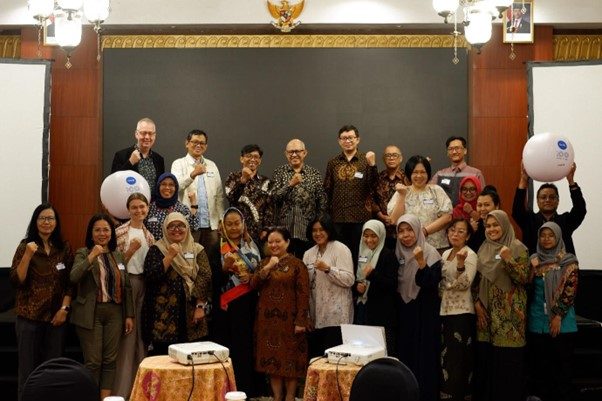
The event was officially opened by the Dean of the Graduate School, Prof. Siti Malkhamah. In her opening remarks, she emphasized the importance of understanding the context of the post-truth era, and invited the audience to be more critical of the use of the term “efficiency” which recently tends to contain negative connotations due to the dynamics of political policy in Indonesia. Closing her speech, Prof. Malkhamah symbolically opened the seminar, which was then followed by a photo session with all participants and invited guests.
The seminar was divided into two main panels: “Land of Differences and Politics of Visibility” and “Mediating Minorities and Activism in Digital Space“. Each panel addressed critical issues related to digital inclusion and empowerment, emphasizing the importance of diverse voices in Indonesia’s rapidly evolving digital landscape.
The target audience for this event was DAAD scholarship alumni, which attracted a diverse group of participants from various academic backgrounds. Despite coming from different disciplines, the enthusiasm of the participants was palpable, especially during the keynote speaker session and panel discussion, where many questions were asked, demonstrating a strong engagement with the topics presented.
The keynote speaker, Prof. Dr. Wening Udasmoro, S.S., M.Hum., DEA, delivered a thought-provoking presentation entitled “Institutionalized Luxury Lifestyle in Indonesia: The Role of the State.” She highlighted the phenomenon of showing off wealth or “flexing” that is increasingly prevalent among public figures in Indonesia, including celebrities and influencers. This trend, characterized by excessive spending on private jets, luxury goods, and lavish pet parties, has become an important aspect of social status, especially on social media platforms.
Ms. Wening Udasmoro argued that the state has an important role in institutionalizing this luxury lifestyle by appointing wealthy individuals to strategic positions and promoting luxury content through state-owned institutions. Referring to theories from Veblen, Baudrillard, and Umberto Eco, she emphasized that society increasingly values the symbol of wealth over its intrinsic meaning, suggesting that luxury lifestyles no longer belong to a handful of elites, but have become part of a social structure reinforced by economic and political forces.
In conclusion, the seminar “Digital Indonesia: Towards Inclusion and Empowerment in Indonesia’s Digital Era” marked an important step towards encouraging dialog and understanding in the context of digital transformation. The Cultural and Media Studies Study Program, with plans to make this seminar part of a series of Lustrum activities, in collaboration with DAAD, is committed to advancing digital Indonesia.
Author: Khoirul Mujazanah